🥊Moderate
Travis Head and Mohammed Siraj — WTC Final Clash
Australia vs India
9 June 2023
Travis Head and Mohammed Siraj had a heated exchange during the WTC Final at The Oval, with aggressive celebrations and verbal jousting.
#head#siraj#wtc final
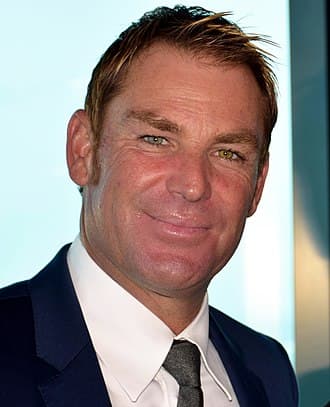
The King of Spin whose Ball of the Century, bookie payments, and various off-field scandals made him one of cricket's most colorful characters.
57 incidents documented
Australia vs India
9 June 2023
Travis Head and Mohammed Siraj had a heated exchange during the WTC Final at The Oval, with aggressive celebrations and verbal jousting.
Kings XI Punjab vs Rajasthan Royals
25 March 2019
Ravichandran Ashwin ran out Jos Buttler at the non-striker's end in an IPL match, reigniting the centuries-old Mankading debate about the spirit of cricket vs the laws of the game.
Rajasthan Royals vs Kings XI Punjab
25 March 2019
R. Ashwin controversially ran out Jos Buttler at the non-striker's end by removing the bails before delivering the ball.
Australia vs South Africa
24 March 2018
Cameron Bancroft was caught on camera using sandpaper to tamper with the ball during the Cape Town Test, leading to bans for Bancroft, captain Steve Smith, and vice-captain David Warner in the most damaging scandal in Australian cricket history.
Australia vs South Africa
24 March 2018
David Warner had to be physically restrained after charging at Quinton de Kock in a staircase at Kingsmead, reportedly after de Kock made comments about Warner's wife Candice.
Australia vs South Africa
3 March 2018
The Warner-de Kock feud set the toxic tone for the entire 2018 Australia-South Africa series that culminated in the Sandpapergate scandal.
Australia vs South Africa
24 March 2018
Cameron Bancroft was caught on camera using sandpaper to tamper with the ball during the third Test at Cape Town, in a plan hatched by David Warner and known to captain Steve Smith, leading to unprecedented bans.
Various
2018-12-30
Shane Warne's commentary career was filled with entertaining moments, from his obsessive pizza ordering to his often wildly wrong predictions and enthusiastic analysis.
West Indies vs England
2016-04-03
After Carlos Brathwaite hit four sixes to win the T20 World Cup Final, Marlon Samuels celebrated by draping himself in a blanket-like flag and sitting in a chair with his feet up.
England vs Sri Lanka
3 June 2014
Sri Lanka's Sachithra Senanayake ran out Jos Buttler at the non-striker's end during an ODI, making Buttler a repeat victim of the controversial dismissal.
Australia vs England
12 June 2013
David Warner punched Joe Root in a bar altercation during the Champions Trophy, leading to a suspension that set the tone for a hostile 2013 Ashes series.
England vs Australia
July-August 2013
The Hot Spot infrared technology was shown to be unreliable during the 2013 Ashes, failing to detect clear edges and undermining confidence in DRS.
Australia vs England (off-field)
13 June 2013
David Warner punched Joe Root in the face at a bar in Birmingham during the ICC Champions Trophy, leading to Warner's suspension.
Australia
11 February 2003
Shane Warne was sent home from the 2003 World Cup after testing positive for a banned diuretic, receiving a one-year ban from cricket.
Zimbabwe vs Australia
5 June 2001
Shane Warne was left seething after Zimbabwe's Dougie Marillier repeatedly scooped him over the keeper's head for boundaries, winning the match for Zimbabwe.
Multiple — international
2000-11-01
Once a Syndicate Bank clerk in Delhi, Mukesh Kumar Gupta — alias 'MK' alias 'John' — became the most consequential bookmaker in cricket's match-fixing era. After Hansie Cronje named him in April 2000, Gupta walked into the Central Bureau of Investigation in Delhi, gave a detailed statement, and named Mohammad Azharuddin, Ajay Jadeja, Manoj Prabhakar, Salim Malik, Mark Waugh, Shane Warne, Brian Lara, Aravinda de Silva and others as cricketers he had paid for information or under-performance.
Pakistan
2000-05-23
Justice Malik Mohammad Qayyum, a Lahore High Court judge, was appointed in September 1998 to investigate match-fixing allegations against the Pakistan team. Over 13 months he heard nearly 70 witnesses including Mark Taylor, Shane Warne, Tim May, Wasim Akram, Waqar Younis, Inzamam-ul-Haq and Salim Malik. The report was completed in October 1999 but only published on May 23, 2000 — banning Salim Malik and Ata-ur-Rehman for life and fining Wasim Akram, Waqar Younis, Mushtaq Ahmed, Inzamam, Akram Raza and Saeed Anwar.
Pakistan vs Various
23 May 2000
Pakistani batsman Saleem Malik became the first international cricketer to be banned for life for match fixing, after Justice Qayyum's inquiry found him guilty of offering bribes to Australian players.
Australia
1998-12-08
On December 8, 1998, the Australian Cricket Board revealed that Mark Waugh and Shane Warne had been fined in 1995 for accepting cash from an Indian bookmaker named 'John' (later identified as Mukesh Gupta) in exchange for pitch and weather information. The ACB had concealed the fines for three years. The cover-up became a bigger scandal than the original incident.
India vs Australia
22 April 1998
In the first of the two Sharjah finals, Sachin Tendulkar was given out LBW to a ball that appeared to be heading down leg. The decision denied fans a potentially historic innings.
Australia vs Sri Lanka
1996-03-17
On March 17, 1996 at Gaddafi Stadium, Aravinda de Silva made an unbeaten 107 (and took 3 for 42) as Sri Lanka beat Australia by 7 wickets to win their first World Cup. He was Player of the Match and Player of the Tournament; Sri Lanka became the first host country to win a World Cup.
Australia vs Various
9 December 1998
Australian stars Shane Warne and Mark Waugh admitted to accepting money from an Indian bookmaker known as 'John' in exchange for pitch and weather information during the 1994 tour to Sri Lanka.
India vs Australia
1994-09-09
After 78 ODI innings without a hundred, Sachin Tendulkar finally got his first one-day century — 110 off 130 balls against Australia at the R Premadasa Stadium during the 1994 Singer World Series. Wisden later called it 'an innings that changed ODI cricket forever.'
Pakistan vs Australia
1994-10-11
On the eve of the Karachi Test in October 1994, Pakistan captain Salim Malik allegedly approached Shane Warne, Mark Waugh and Tim May with bribes of around US$200,000 each to underperform. Australia lost the Test by one wicket. Malik denied everything for years; Justice Qayyum's 2000 report found him guilty and banned him for life.
England vs Australia
1993-06-04
Shane Warne's first ball in Ashes cricket — 4 June 1993, Old Trafford — turned from outside leg stump and clipped the top of Gatting's off stump. The delivery became universally known as the Ball of the Century. Gatting's expression said everything.
Australia vs West Indies
1993-01-05
On January 5, 1993, a 23-year-old Brian Lara made his maiden Test hundred at the SCG — and turned it into 277 off 372 balls before being run out. The innings, his fifth Test, announced the arrival of the most exciting batter of the 1990s.
England vs Australia
4 June 1993
While not a controversial decision itself, Mike Gatting's utter disbelief at being bowled by Shane Warne's first ball in Ashes cricket highlighted how umpires and batsmen alike were unprepared for extreme spin.
West Indies vs Pakistan
1987-11-01
Courtney Walsh refused to run out Pakistan's non-striker Saleem Jaffar who was backing up too far, costing West Indies a World Cup spot in one of cricket's greatest acts of sportsmanship.
Australia vs England
12-17 February 1971
England regained the Ashes after twelve years on 17 February 1971 at Sydney, winning the seventh Test by 62 runs to take the series 2-0. John Snow's 7/40 in the second innings was the defining performance, but the Test was equally remembered for the bouncer that felled Terry Jenner, the bottle-throwing crowd disturbance, and Ray Illingworth leading his team off the field — and for the Test debut, in the previous Adelaide match, of a 21-year-old Dennis Lillee who took 5/84.
Australia vs India
13-17 December 1947
Vinoo Mankad ran out Bill Brown at the non-striker's end during India's tour of Australia, creating a dismissal type that would bear his name for decades.
Dominions XI v England XI
1945-08-27
Three months after VE Day, Keith Miller hit 185 for a Dominions XI against England at Lord's, the highest score of an unforgettable post-war summer. He went from 61 not out overnight to 185 in 99 minutes on the third morning, striking seven sixes — including one over the press box that landed in the upper tier and another that cleared 170 metres into Block Q. Wisden called the match 'one of the finest ever seen' at headquarters; Miller's innings, more than any other in 1945, told English audiences that pre-war balance of power had been broken.
England v Australian Services XI
1945-05-19
Less than two weeks after VE Day, England and an Australian Services XI began a five-match Victory Test series at Lord's that ended 2-2 with one drawn after a final-day finish at Old Trafford on 22 August 1945. Played as celebration cricket and watched by 367,000 people across three grounds, the series re-introduced first-class cricket to a war-weary Britain, launched Keith Miller and confirmed Lindsay Hassett's quality as a captain. Although first-class only — neither board would grant Test status to Services teams — the series functioned as a public reopening of cricket and is the foundation of the modern English summer calendar.
Army XI v Royal Air Force XI
1944-07-29
On 29 July 1944, before more than 3,000 spectators at Lord's, an Army XI played the Royal Air Force in a wartime charity match featuring Wally Hammond. About an hour into play, a German V-1 'doodlebug' flying bomb cut its motor directly overhead. Players and crowd flattened themselves on the turf; the bomb dived to earth roughly 200 yards short of the ground. Bob Wyatt picked himself up, completed his interrupted run-up, and Jack Robertson lofted the very next ball into the Grand Stand for six. Plum Warner later said the moment summarised what cricket meant to wartime London.
Royal Australian Air Force / Australian Imperial Force (Bradman)
1941-06-30
Don Bradman, Australia's captain and the world's most famous cricketer, was invalided out of military service on 30 June 1941 with chronic fibrositis. He had enlisted in the Royal Australian Air Force in June 1940, transferred to the Army School of Physical Training at Frankston, and within months was so debilitated by muscular pain in his back and right arm that he could not shave himself or comb his hair. The discharge — barely reported at the time under wartime censorship — kept him out of cricket for almost five years and shaped the legend of his post-war return.
Australia
1936-03-06
Clarrie Grimmett was the first bowler in Test history to take 200 Test wickets — reaching the milestone in March 1936 against South Africa, in his last Test innings before being controversially dropped. He finished with 216 wickets in 37 Tests at 24.21, all of them taken between the ages of 33 and 44, and held the world Test wicket record until Alec Bedser broke it in 1953.
India / England
1933-04-02
On 2 April 1933 Ranjitsinhji — Jam Sahib of Nawanagar, England Test cricketer, leg-glance pioneer and the most famous Indian-born sportsman of his generation — died at Jamnagar at the age of 60. His death prompted a global cricket obituary and gave the Ranji Trophy, founded the next year, its name.
Australia v England
1933-01-14
On 14 January 1933 a Larwood bouncer felled Australian captain Bill Woodfull over the heart, the crowd nearly came over the fence, and that evening MCC manager Pelham Warner walked into the home dressing room to be told, 'There are two teams out there. One is trying to play cricket, the other is not.' The exchange leaked, the Adelaide Test became the diplomatic flashpoint of Bodyline, and the most famous sentence in Anglo-Australian cricket entered the language.
Australia v England
1933-01-16
Two days after Woodfull was struck over the heart, Australian wicketkeeper-batsman Bert Oldfield top-edged a Harold Larwood lifter into his own temple at Adelaide. The blow fractured his skull. Crucially, the field was conventional — not the leg-theory cordon — but the crowd did not know that. Mounted police lined the boundary as Oldfield was carried off; the Adelaide Test came within a single Australian Board decision of being abandoned.
Australia v England
1933-01-18
On 18 January 1933, two days after Bert Oldfield's skull was fractured in Adelaide, the Australian Board of Control cabled Lord's accusing England of 'unsportsmanlike' play. The MCC's reply offered to cancel the tour outright. Two more cables, the intervention of Prime Minister Joseph Lyons and a quiet retraction of the offending word were needed to keep the series alive. It is the most consequential cable exchange in cricket history.
Australia vs England
2 December 1932
The 1932-33 Bodyline series: England captain Douglas Jardine directed Harold Larwood to bowl short-pitched leg-theory at batsmen's bodies to stop Don Bradman. Nearly caused a diplomatic rupture between England and Australia; England won 4-1.
England
1932-08-12
In August 1932 the MCC selectors confirmed Douglas Jardine as England's captain for the 1932-33 tour of Australia, a decision contested at the highest levels of English cricket and one that — combined with Plum Warner's appointment as tour manager — would set the conditions for the Bodyline series.
England v Australia
1930-08-16
With the series locked at 1-1 and the Ashes on the line, Bradman walked out at The Oval and made 232 across two days. Australia won by an innings and 39 runs, regained the urn, and finished a series in which Bradman had averaged 139.14. It was the innings during which Douglas Jardine, watching from the pavilion, began thinking seriously about leg theory.
Nottinghamshire and English county cricket
1928-09-30
Across the 1927 and 1928 county seasons the 23-year-old Notts miner Harold Larwood took 100, 138 and then 138 wickets — establishing himself as the fastest bowler in England and securing his place in the 1928-29 Ashes side that would, four years later, take its leg-theory plans to Australia.
England v Australia
1926-08-18
Recalled to the England side aged 48 years and 165 days, Wilfred Rhodes took 4 for 44 in Australia's second innings at the Oval in August 1926, helping to win England's first Ashes series since 1912. He remains the oldest man ever to play Test cricket.
Australia vs England
1912-02-09
Jack Hobbs (178) and Wilfred Rhodes (179) put on 323 for the first wicket at Melbourne, setting a Test record that stood for 22 years and remains England's highest opening partnership against Australia more than a century later.
Australia vs England
1912-03-01
England's seam pair Sydney Barnes and Frank Foster shared 66 of the 95 Australian wickets to fall as Plum Warner's MCC side, captained by Johnny Douglas after Warner fell ill, lost the opening Test in Sydney and then won four in a row to take the series 4-1.
England
1910-12-15
Wilfred Rhodes had begun his Test career in 1899 batting at number eleven for England; through 1910-12 he was promoted up the order until, on the 1911-12 tour of Australia, he was opening with Jack Hobbs. The transformation produced one of cricket's great opening pairs and culminated in the 323-run stand at Melbourne.
Australia, England
1909-08-31
Montague 'Monty' Noble played 42 Tests for Australia between 1898 and 1909, captaining 15 of them and winning eight. A medium-paced bowler whose 'spin-swerve' (an early form of off-cutting in-swinger) and a top-order batsman, he scored 1,997 Test runs at 30.25 and took 121 Test wickets at 25. He led Australia to the Ashes win at home in 1907-08 and the away win in 1909.
Australia, England
1907-12-13
Charlie Macartney, picked as a left-arm spinner with handy lower-order batting, made his Test debut at Sydney in December 1907. Kent's KL Hutchings, observing Macartney's confident demeanour at the wicket, dubbed him 'The Governor-General' — a name meant ironically (Macartney was barely 21) but one that stuck for the rest of his career.
South Africa, England
1906-01-04
On 4 January 1906 at the Old Wanderers, Johannesburg, South Africa beat England by one wicket in the first Test of a five-match series — their first Test victory at the 12th attempt. Dave Nourse's 93 not out and Gordon White's 81 carried the home side past 284 in the fourth innings; the South African googly quartet, all on debut in the same match, took 11 wickets between them.
England, Australia
1905-08-21
Captaining England for the first time in 1905, Stanley Jackson won all five tosses against Joe Darling, topped both batting and bowling averages on either side (492 runs at 70.28; 13 wickets at 15.46), and led England to a 2-0 series win to retain the Ashes. He retired from Test cricket immediately afterwards, never having toured Australia.
England, Australia
1904-03-05
Pelham 'Plum' Warner captained the first MCC-organised tour to Australia in 1903-04, regaining the Ashes 3-2 — England's first Ashes series win since 1896. Warner's selection was controversial (Archie MacLaren refused to tour because of it), but the campaign produced R.E. Foster's 287, Bosanquet's googly debut and Warner's own bestselling book 'How We Recovered The Ashes'.
Australia, England
1904-03-07
Hugh Trumble took 7 for 28 in his last Test innings, including a hat-trick of Bosanquet, Plum Warner and Dick Lilley, as Australia beat England by 218 runs at the MCG in March 1904. The hat-trick was Trumble's second in Tests (the first being against England at the same ground in 1902); he was the first man to take two Test hat-tricks. Australia won the dead rubber but lost the series 3-2.
England, Australia
1903-12-11
Reginald Erskine 'Tip' Foster scored 287 on Test debut at Sydney in December 1903, then the highest individual score in Test cricket. It remained a world record until 1930 and is still the highest score by any Test debutant. Foster's epic dragged England, captained by Plum Warner, from 73 for 3 to a first innings of 577 and the platform for an Ashes-winning campaign.
Australia, England
1903-12-17
Chasing 577 in the fourth innings after R.E. Foster's 287 had taken England to a giant total, Australia were 173 for 5 with the Test seemingly lost when Victor Trumper, on 0, was joined by Clem Hill. Trumper went on to 185 not out — his hundred coming in 94 minutes — but it was not enough: Australia, all out 485, lost the match by five wickets. The innings is often ranked alongside Trumper's Old Trafford 104.
MCC, Middlesex, England
1903-12-11
Pelham 'Plum' Warner, the Trinidad-born Oxford-educated Middlesex amateur, captained the first MCC team to tour Australia under the club's name in 1903-04 and won that series 3-2. The tour established the convention that English overseas tours were thereafter MCC enterprises rather than private commercial ventures, an institutional change in international cricket whose effects lasted until 1977.
Australia v England
1898-03-04
On 4 March 1898, in the dead-rubber Fifth Test at Sydney, Australia's South Australian opener Joe Darling reached his Test hundred in 91 minutes — at the time the fastest Test century in cricket. He went on to 160 in 165 minutes with 30 boundaries. By the end of the series Darling had become the first player to score 500 runs in an Ashes series and the first to score three hundreds in any series. Within fifteen months he was Australia's captain.