← Players
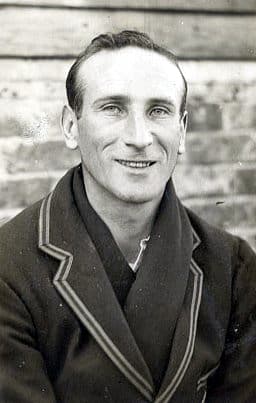
Douglas Jardine

Douglas Jardine

England·Captain

The architect of the Bodyline strategy in 1932-33 that nearly caused a diplomatic crisis between England and Australia.

17 incidents documented

Controversies & Incidents

🔥Serious

Jardine Stands Down — March 1934

England

1934-03-21

On 21 March 1934 Douglas Jardine wrote to The Cricketer that he had 'neither the desire nor the intention' of playing in the upcoming home Ashes series. The announcement, taken as a quiet resignation, removed the architect of Bodyline from the field before Australia returned to England — a precondition Australia's Board had implicitly demanded.

#douglas-jardine#1934#resignation
🥊Serious

Constantine's Bouncers at Jardine — Old Trafford, 1933

England v West Indies

1933-07-22

Six months after Bodyline, Learie Constantine and Manny Martindale opened up with sustained leg-theory bouncers at Douglas Jardine in the Old Trafford Test. Jardine, captaining England, stood up and made 127 — his only Test century — proving, at considerable physical cost, that he could face the tactic he had unleashed on Australia.

#learie-constantine#douglas-jardine#bouncer
Moderate

West Indies' Tour of England, 1933 — Constantine, Headley and a New Force

England v West Indies

1933-06-24

The 1933 West Indies tour of England — three Tests, fifteen first-class fixtures, Headley's 169 not out at Old Trafford and Constantine's bouncer-led attack at Jardine — established the Caribbean side as more than a touring novelty and set the template for the West Indies team that would, a generation later, dominate the game.

#west-indies#1933#england-tour
🔥Explosive

Adelaide Test 1933 — Woodfull, Warner and the 'Two Teams' Line

Australia v England

1933-01-14

On 14 January 1933 a Larwood bouncer felled Australian captain Bill Woodfull over the heart, the crowd nearly came over the fence, and that evening MCC manager Pelham Warner walked into the home dressing room to be told, 'There are two teams out there. One is trying to play cricket, the other is not.' The exchange leaked, the Adelaide Test became the diplomatic flashpoint of Bodyline, and the most famous sentence in Anglo-Australian cricket entered the language.

#bodyline#adelaide#1933
🔥Explosive

The Bodyline Cables — ABCB and MCC at Diplomatic Breaking Point, 1933

Australia v England

1933-01-18

On 18 January 1933, two days after Bert Oldfield's skull was fractured in Adelaide, the Australian Board of Control cabled Lord's accusing England of 'unsportsmanlike' play. The MCC's reply offered to cancel the tour outright. Two more cables, the intervention of Prime Minister Joseph Lyons and a quiet retraction of the offending word were needed to keep the series alive. It is the most consequential cable exchange in cricket history.

#bodyline#diplomacy#abcb
🔥Serious

Harold Larwood's Last Test — A 98 With a Broken Foot, 1933

Australia v England

1933-02-23

In the fifth Test at Sydney in February 1933, Harold Larwood broke two bones in his left foot bowling Bodyline at top pace — and Douglas Jardine kept him on the field, refusing to let him leave until Don Bradman was dismissed. Hobbling, Larwood went out to bat at No. 4 and made 98. He never played another Test. The Bodyline tour's spearhead was effectively retired by the captain who had unleashed him.

#larwood#bodyline#1933
Serious

India's First Home Test — Bombay Gymkhana, December 1933

India v England

1933-12-15

On 15 December 1933 India played its first home Test, against Douglas Jardine's MCC at the Bombay Gymkhana Ground, a colonial members' club from which most Indians were excluded by membership rules. Lala Amarnath produced India's first Test century, 118 in 117 minutes on debut, and the new ground hosted only this single Test before the Brabourne Stadium took over Bombay's international cricket. England won by nine wickets; Indian Test cricket finally had a home address.

#india#first-home-test#1933
Serious

Larwood's 33 Wickets — The Bodyline Series Tally, 1932-33

Australia v England

1933-02-28

Across the five Tests of the Bodyline series in 1932-33, Harold Larwood took 33 wickets at 19.51 — still the highest haul by an English fast bowler in an Ashes series in Australia. Including his unlikely 98 with the bat in his last Test, Larwood's tour was statistically the most dominant by a touring fast bowler since SF Barnes a quarter-century earlier.

#larwood#bodyline#1932-33
🔥Explosive

The Bodyline Series

Australia vs England

2 December 1932

The 1932-33 Bodyline series: England captain Douglas Jardine directed Harold Larwood to bowl short-pitched leg-theory at batsmen's bodies to stop Don Bradman. Nearly caused a diplomatic rupture between England and Australia; England won 4-1.

#bodyline#bodyline series#bodyline cricket
Serious

C.K. Nayudu Leads India in Inaugural Test — Lord's, 1932

England v India

1932-06-25

On 25 June 1932 Cottari Kanakaiya Nayudu led India onto Lord's for India's first Test match, the first non-white captain of an Empire side at headquarters. Mohammad Nissar's three early wickets reduced England to 19 for 3 and India lost by only 158 runs in a result that took English critics by surprise.

#ck-nayudu#india#first-test
🔥Serious

Douglas Jardine Appointed Ashes Captain, August 1932

England

1932-08-12

In August 1932 the MCC selectors confirmed Douglas Jardine as England's captain for the 1932-33 tour of Australia, a decision contested at the highest levels of English cricket and one that — combined with Plum Warner's appointment as tour manager — would set the conditions for the Bodyline series.

#douglas-jardine#1932#captaincy-appointment
Serious

Pataudi Sr's Hundred on Ashes Debut — Sydney, December 1932

Australia v England

1932-12-02

On 2 December 1932 the Nawab of Pataudi Sr scored 102 on his Ashes debut at Sydney, the first Indian-born cricketer to make a hundred on Ashes debut. He played one more Test of the series and never another for England, his innings now a footnote inside the larger story of Bodyline.

#iftikhar-ali-khan-pataudi#ashes#1932
Serious

Hedley Verity's 10 for 10 — The Best Figures in First-Class History, 1932

Yorkshire v Nottinghamshire

1932-07-12

On 12 July 1932, slow left-armer Hedley Verity took 10 wickets for 10 runs at Headingley, dismissing a strong Nottinghamshire side for 67 in their second innings. The figures — 19.4 overs, 16 maidens, 10 for 10 — remain the best bowling analysis in the history of first-class cricket. Inside the spell were seven wickets in 15 deliveries, and a hat-trick. Yorkshire won by 10 wickets.

#hedley-verity#yorkshire#nottinghamshire
Serious

Stan McCabe's 187* — The Innings That Defied Bodyline, Sydney 1932

Australia v England

1932-12-03

In the first Test of the Bodyline series, with Bradman absent through illness and Australia 3 for 82, the 22-year-old Stan McCabe took on Larwood and Voce's leg-theory and counter-attacked his way to 187 not out off 233 balls. The innings included 25 fours and a string of hooks against the line of fire that briefly forced Jardine to drop the Bodyline field. Australia still lost the Test by ten wickets, but McCabe's century stands as one of the great acts of physical and moral courage in Test cricket.

#stan-mccabe#bodyline#ashes
Serious

India's Test Debut at Lord's — CK Nayudu's Side, June 1932

England v India

1932-06-25

On 25 June 1932 India played its first Test, against England at Lord's, captained by Cottari Kanakaiya Nayudu after the Maharaja of Porbandar quietly stood aside on the morning of the match. India lost by 158 runs, but Mohammad Nissar took 5 for 93 with raw fast bowling, Amar Singh chipped in with 2/75 and 74 with the bat, and CK Nayudu stiffened the order. India had become the sixth Test-playing nation, after Australia, England, South Africa, West Indies and New Zealand.

#india#test-debut#1932
Serious

Bradman's 232 at The Oval — Ashes Reclaimed, 1930

England v Australia

1930-08-16

With the series locked at 1-1 and the Ashes on the line, Bradman walked out at The Oval and made 232 across two days. Australia won by an innings and 39 runs, regained the urn, and finished a series in which Bradman had averaged 139.14. It was the innings during which Douglas Jardine, watching from the pavilion, began thinking seriously about leg theory.

#don-bradman#ashes#1930
Mild

Harold Larwood Emerges — Nottinghamshire's Pace Spearhead, 1927-28

Nottinghamshire and English county cricket

1928-09-30

Across the 1927 and 1928 county seasons the 23-year-old Notts miner Harold Larwood took 100, 138 and then 138 wickets — establishing himself as the fastest bowler in England and securing his place in the 1928-29 Ashes side that would, four years later, take its leg-theory plans to Australia.

#harold-larwood#nottinghamshire#england